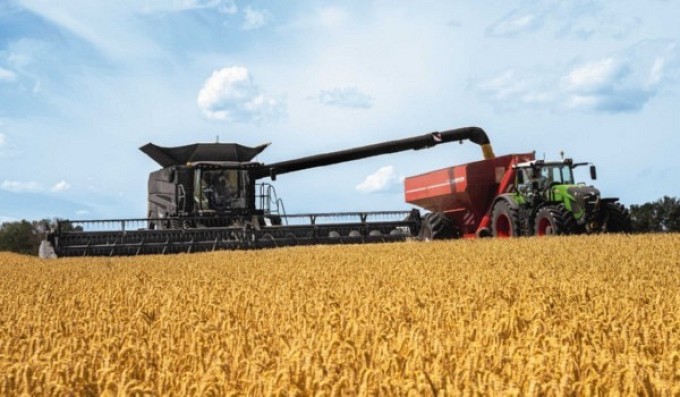
Since mid-July, Food Corporation specialists have been conducting on-site monitoring of farms participating in the forward program to assess crop conditions, verify the use of received funding, and identify potential risks. This year, the fields of 54 farms in the North Kazakhstan region, 73 in the Kostanay region, 44 in the Akmola region, 6 in the Pavlodar region, and 3 agricultural enterprises in the East Kazakhstan region were inspected.
According to the monitoring results, crops in the surveyed areas are in good condition. However, the situation varies across regions and depends on weather conditions, moisture, and nutrient availability. Most farms in the grain-growing belt have already begun harvesting.
In Kostanay Region, as of August 17, the leading grain and legume yields were in the Fyodorovsky District (28.0 c/ha), Karabalyk District (22.8 c/ha), and Denisovsky District (18.6 c/ha).
In Akmola Region, the highest yields at the initial stage of harvesting were observed in the Bulandy and Burabay Districts—20 and 20.1 c/ha, respectively. Farms in the Zerendy District are harvesting 15.7 c/ha.
In North Kazakhstan Region, the grain and legume yields in the Aiyrtau and Yesil Districts are 16.5 c/ha, in the Magzhan Zhumabayev District—15 c/ha, and in the Kyzylzhar District—14.9 c/ha.
For many farms, forward financing played a significant role in preparing for the spring planting season. Farmers used the funds received to purchase seeds, fertilizers, crop protection products, fuel, and fieldwork.
"Financial support is especially important for farms at the beginning of the season, when the main expenses are already incurred, but revenue from the sale of the upcoming harvest has not yet been realized. Thanks to this financing, we were able to purchase fuel and fertilizers on time and complete all work within the optimal timeframe. This directly impacts the final result," said Omurserik Akishev, Director of Imran Agro LLC.
At meetings with farmers, the President repeatedly emphasized the need to reduce dependence on wheat and transition to the cultivation of highly profitable crops. The Ministry of Agriculture's consistent policy of diversifying cropland is yielding tangible results—farmers are gradually changing their cropping patterns. In 2026, the area under oilseed crops increased to a record 5.1 million hectares, of which 2.2 million hectares are sunflowers.
"We are gradually expanding the area planted with oilseeds. There's good demand for them now, making the economics more attractive. This means we're no longer relying solely on wheat, but are spreading the risks across different crops. Support from the government and the Food Corporation provides more opportunities for such planning," noted Sattar Smatayev, head of the Smatayev farm in the North Kazakhstan region.
According to another participant in the forward program, in addition to financing, guaranteed sales of finished agricultural products after the harvest are crucial for farmers.
"For us, it's not just important to receive financing and complete the sowing season on time. It's also crucial to understand at the production stage that we can guarantee we'll be able to sell part of the harvest. Forward purchasing is a truly effective support tool for farmers," said Sattar Smatayev, head of the Agro Egin farm in the Kostanay region.
The Food Corporation continues to monitor the harvesting campaign and maintain contact with farmers.