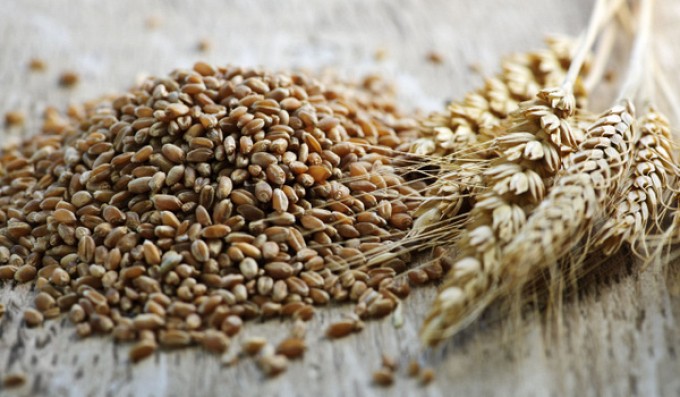
There will be no fundamental surge in grain prices, nor any significant drop. Grain prices on Kazakhstan’s domestic market are expected to strengthen gradually during the 2026–2027 season. This was announced by Asylkhan Dzhuvashev, Chairman of the Board of NC Food Contract Corporation JSC, at the Eurasian Agricom-2026 conference in Astana. He emphasized that this year's harvest would be sufficient to meet the country's domestic needs and maintain average annual export volumes, according to the APK Novosti news agency.
Given current stocks and market supply, the Food Contract Corporation sees no immediate need for additional state intervention purchases. At the same time, Dzhuvashev noted that purchase prices under the forward contracting program have been set at a fair level that meets farmers' expectations—ranging from 92,000 to 115,000 tenge per tonne for Class 3 wheat, depending on quality. Support from the Government and the Ministry of Agriculture is helping the industry navigate these challenges.
According to the head of the Food Contract Corporation, the company aims to support agricultural producers as the new harvest arrives; conversely, in times of grain shortages and rising prices, it ensures that processors and poultry farms have access to resources at more affordable rates—a key function of the national grain operator. Last year, a combination of this purchasing policy, compensation for grain shippers' transport costs, and support from the railway operator Kazakhstan Temir Zholy helped boost Kazakhstani wheat exports. As a result, the country successfully entered new markets—including distant destinations—while simultaneously increasing supplies along traditional routes. The government recently announced the extension of support measures for grain exporters into the new agricultural season, a move set to consolidate this success.
Regarding price trends, industry representatives shared similar forecasts.
"There are currently no sharp price fluctuations in the domestic market, unlike in 2022, for instance. As the season progresses, we may see a slight strengthening of grain prices," suggested Asylkhan Dzhuvashev.
The Grain Union of Kazakhstan holds a similar view.
"We do not expect any fundamental surge or drop in prices. Most likely, there will be a gradual rise in grain values on the domestic market," noted Alexander Malov, Head of the Trade Committee at the Grain Union of Kazakhstan.
In addition to market supply-and-demand dynamics, conference participants focused heavily on developing trade with their eastern neighbor. A special session titled "Developing Trade with China and Attracting Investment in Grain Infrastructure" was held on the sidelines of Eurasian Agricom-2026; there, Sagat Toleu, Managing Director of NC Food Contract Corporation JSC, presented the capabilities of the China-Kazakhstan digital trade platform.
To date, more than 40 Kazakhstani companies have gained access to the platform, which connects them with over 50,000 importers on the Chinese side. This enables domestic exporters to negotiate directly with end consumers, bypassing intermediaries.
Registration is free for Kazakhstani participants. Exporters can list product lots and agree on various delivery terms—such as FCA and DAP—with buyers. To ensure the fulfillment of obligations, both parties are required to make a security deposit amounting to 10% of the lot's value. If one party fails to execute the deal, their deposit is transferred to the counterparty. Currently, operations on the platform are governed by Chinese law; however, Prodcorporation is already exploring the option of selecting the applicable law when concluding transactions. Expanding these capabilities will enable agricultural exporters to engage more confidently with buyers in one of the key target markets.