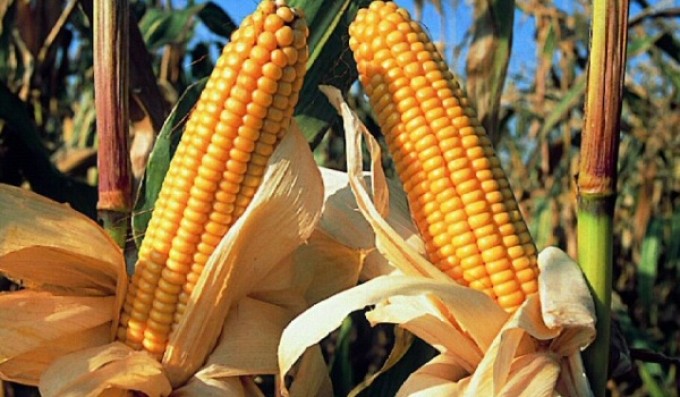
In the Ualikhanov District of the North Kazakhstan Region, trials are underway for a corn-growing technology developed in China. Initiated by the Grain Union of Kazakhstan with the participation of the company Taihua, the project is currently yielding approximately 5 tons per hectare. Plans are in place to expand the cultivation area to 1,400 hectares by 2026, with the goal of reaching a yield of up to 8 tons per hectare and establishing a raw material base for deep processing, reports the news agency APK Novosti.
Northern Kazakhstan is traditionally considered a high-risk zone for cultivating heat-loving crops. The Grain Union of Kazakhstan launched this project to adapt advanced agronomic practices to local conditions. The Ualikhanov District was selected as the testing site, where specialists are evaluating three different corn varieties. The primary objective is to identify the specific seed stock and technology capable of ensuring consistent productivity within the region’s sharply continental climate.
The Chinese company Taihua serves as a key partner in the project. One of the hybrids under evaluation—developed with the involvement of plant breeders from Northeast China—has demonstrated high resilience during the testing phase, showing an ability to withstand the late-spring cold snaps and dry spells characteristic of the North Kazakhstan Region.
Preliminary data from the trial site confirm the effectiveness of this approach, with yields reaching approximately 5 tons per hectare. For comparison, average yields for crops traditionally grown in the North Kazakhstan Region can fluctuate significantly depending on the weather conditions of a given year.
The success of this pilot project paves the way for industrial-scale implementation. The Grain Union of Kazakhstan has set a target for significant expansion by 2026, with the area under cultivation using new technology slated to increase to 1,400 hectares. Anticipated yields of up to 8 tonnes per hectare will not only meet domestic demand but also create export potential.
The project extends beyond mere grain cultivation. Its strategic objective is to diversify crop production and establish a sustainable raw-material base for the livestock sector and deep-processing enterprises. The introduction of advanced Chinese agricultural technologies, specialized machinery, and high-quality seed stock will facilitate the regional production of corn starch, molasses, bioethanol, and high-protein animal feed.
According to the news agency "APK Novosti," corn has been grown in Northern Kazakhstan previously, though its role within the region’s agricultural structure was different. Historically—and currently—it accounts for only a small share compared to primary grain crops such as wheat and barley. The vast majority of corn cultivation—approximately 95%—has traditionally been concentrated in the south and southeast of the country (the Almaty, Turkistan, Zhetysu, and Zhambyl regions).
In the northern regions, including the North Kazakhstan Region, corn was primarily cultivated for silage and green fodder to support the livestock sector. Due to a short growing season and the risk of early frosts, growing corn for grain was considered highly risky. For this purpose, early-maturing hybrids were used, which could reach maturity by early September.
Nevertheless, agricultural producers in the region have long been exploring the potential of this crop. In the scientific community, there is existing research on the topic of "Cultivating maize for grain within the shelterbelts of fallow fields on the chernozem soils of Northern Kazakhstan," which confirms that attempts to transition maize from a purely forage crop to a grain crop have been made in the past.
The new project by the Grain Union of Kazakhstan and the company Taihua differs from previous efforts in three key ways:
1. A comprehensive technological package. This involves more than just switching varieties; it entails the integrated implementation of Chinese agricultural technologies, specialized machinery, and irrigation systems—all adapted for high-risk farming environments.
2. A focus on deep processing. From the outset, the project is geared toward establishing a raw-material base for industrial production (such as starch, bioethanol, and molasses), rather than focusing solely on livestock feed. This necessitates a consistently high yield of grain, as opposed to green biomass.
3. Ambitious yield targets. The projected output of 8 tonnes per hectare (80 centners) is nearly 1.5 times higher than the current national average (5.8 tonnes, or 58 centners, per hectare). Achieving such figures in the conditions of Northern Kazakhstan is made possible by new cold- and drought-resistant hybrids that reach maturity before the onset of adverse weather.