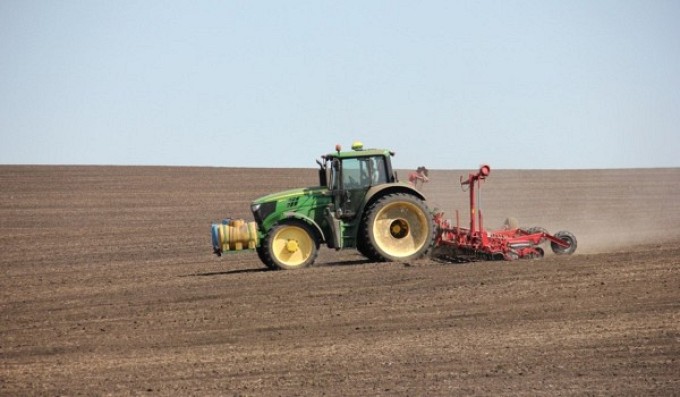
The 2026 sowing campaign has been completed in Kazakhstan. Spring field work was completed within the established agricultural deadlines in all regions of the country, according to the APK News agency.
A comprehensive set of state support measures facilitated the timely completion of the campaign, the government reported. Particular attention was paid to providing farmers with the necessary material and technical resources, diversifying the structure of cropland, implementing water-saving technologies, upgrading agricultural machinery, and expanding agricultural producers' access to preferential financing.
The measures taken ensured the sustainable conduct of field work and created additional conditions for improving the efficiency of agricultural production.
Early financing for farmers and effective support mechanisms
The total sown area in Kazakhstan this season amounted to 23.8 million hectares, 180,000 hectares more than last year. The start of mass sowing in all regions was preceded by a series of mandatory soil preparation procedures: moisture retention, pre-sowing cultivation, and spring plowing.
By crop, the breakdown of sowing activities is as follows:
grain crops – 14.6 million hectares;
oilseeds – 4.2 million hectares;
forage crops – 1.2 million hectares;
cotton – 166,000 hectares;
vegetable crops – 120,000 hectares;
potatoes – 126,000 hectares;
melons – 84,000 hectares;
sugar beets – 22,000 hectares.
In accordance with the Head of State's instruction given at the Agricultural Workers Forum, the Government has introduced early campaign financing. This mechanism allows farmers to secure the necessary financial resources in advance, purchase seeds, fertilizers, plant protection products, and equipment promptly at the most favorable prices, and prepare thoroughly for fieldwork. This reduces agricultural producers' dependence on seasonal price increases and ensures that the sowing campaign is completed within optimal agricultural timeframes.
For the 2026 All-Russian Procurement Program (VPR), applications began an unprecedentedly early date—in October 2025. A total of 750 billion tenge is planned for concessional financing of spring sowing and harvesting at 5% per annum in 2026. To date, approximately 4,800 agricultural producers have already received financing totaling 573 billion tenge, covering over 6.8 million hectares.
For farmers with insufficient collateral, the introduction of a state guarantee program amounting to 85% of the VPR loan amount has become a key support. In 2025, 1,633 loan guarantees totaling 283 billion tenge were issued under this instrument. In 2026, 16 billion tenge was allocated from the republican budget: 1,733 loan guarantees totaling 273 billion tenge were issued under the campaign.
Funds are now delivered to farmers through the widest possible network of operators:
Agrarian Credit Corporation (ACC);
Second-tier banks (STB);
Microfinance organizations (MFOs);
Regional Investment Centers (RICs), Credit Partnerships (CPs);
Social Entrepreneurial Corporations (SECs).
Progress of Spring Field Work in the Regions
The Akmola, North Kazakhstan, and Kostanay regions have traditionally been Kazakhstan's main grain-growing regions. The country's food security largely depends on the sowing results in these regions, so they are always given special attention.
In the North Kazakhstan region, the sown area was 4.3 million hectares. As part of the diversification of the crop structure, the grain area was optimized to 2.9 million hectares, including 1.9 million hectares of wheat. Emphasis was placed on high-margin crops: oilseed acreage reached 1 million hectares for the second year in a row. Forage crops occupied 405,000 hectares, potatoes 8,600 hectares, and vegetables 1,400 hectares. At the same time, the region is actively updating its agricultural machinery fleet. This year, this figure is planned to reach 8.5%. The purchase of 3,500 units of equipment worth 90 billion tenge is planned, of which 770 units worth 29.9 billion tenge have already been purchased.
In Akmola Oblast, the sown area is 5.6 million hectares. As part of diversification, grain and legume crops have been reduced by 184,600 hectares to 4.5 million hectares. This has allowed for expansion of more profitable crops: oilseeds have been increased to 715,000 hectares, an increase of 220,000 hectares, and forage crops to 370,700 hectares, an increase of 34,100 hectares. Potatoes and vegetables are grown on 8,600 hectares and 1,500 hectares, respectively.
Along with fieldwork, the region demonstrates high logistics and industrial potential. Since the beginning of the year, 1.9 million tons of grain have been exported from grain receiving facilities in the region.
A major step in developing grain processing will be the construction of a large deep grain processing plant in the Arshaly district, with a capacity of up to 3 million tons of raw material per year. The project is planned to produce monosodium glutamate, lysine, and other products. The project is being implemented jointly with Dalian Hesheng Holdings Group Co., Ltd. The implementation period is scheduled for 2026–2028, with an investment of 900 billion tenge, creating up to 1,000 jobs in the first phase and up to 3,000 when fully equipped.
The region is also actively modernizing its agricultural machinery. This year, the renewal rate is planned to reach 8.5%, compared to 7% in 2025. Between January and May, farmers in the region have already purchased 789 pieces of equipment worth 38.4 billion tenge.
In Kostanay Oblast, the planned spring sowing area for the current season was 5.2 million hectares. As part of the diversification program, the area under oilseeds was increased to 887,000 hectares by reducing the share of wheat, along with legumes to 212,300 hectares, potatoes to 7,500 hectares, and annual grasses to 107,000 hectares. 514,200 tons of quality seeds of classes 1–3 were used during the campaign, and 73,300 tons of subsidized diesel fuel were allocated at a price of no more than 281 tenge per liter.
At the same time, the region maintains its leadership in grain processing into flour, ranking first in the country with a 30% share. The region has 35 milling complexes with a total capacity of up to 2 million tons per year. In 2024–2025, four investment projects worth 9.3 billion tenge were commissioned in the grain processing sector. The construction of a deep processing plant for wheat, Qostanai Grain Industry LLC, with a capacity of 415 thousand tons per year, as well as the Tobol center KZ LLC complex, is planned for 2027–2028.
Diversification of Crop Areas and Water Conservation
In accordance with the President's instructions, priority has been given to highly profitable and strategically important crops during this year's sowing campaign. As a result, the area under oilseeds will exceed 4 million hectares, an increase of 74,000 hectares, while forage crops will occupy more than 3.3 million hectares, an increase of 237,000 hectares.
At the same time, the gradual optimization of the cropping structure continues. Wheat has been reduced to 12.1 million hectares, 125,000 hectares less than last year. Corn has also been reduced.
Particular attention has been paid to the southern regions of the country, where a systematic optimization of the area under water-intensive crops has been carried out. The cropping structure was approved taking into account water use limits and the actual water balance:
rice area across the republic has been reduced by 20,600 hectares; In cotton production, the transition to water-saving technologies has been accelerated: by reducing traditional irrigation methods by 12,000 hectares, the area under drip irrigation has increased by 29,800 hectares.
Provision of Subsidized Diesel Fuel
The Ministry of Energy has allocated 402,300 tons of diesel fuel for the sowing campaign, taking into account the production capacity of domestic oil refineries.
The government has taken measures to contain the cost of fuel and lubricants for farmers: taking into account operating costs, the final price of subsidized diesel fuel for agricultural producers has been fixed at 281 tenge per liter. This is 15% lower than the average market price at gas stations across the country, where the retail price is 330 tenge per liter.
Within the approved shipping schedule, with a total planned shipment of 402,300 tons, farmers have already signed contracts and paid for 324,800 tons, representing 81% of the total plan. A total of 300,900 tons, or 75% of the total volume of discounted fuel, have been shipped and delivered to the regions.
Modernization of the Machinery and Tractor Fleet and State Support Mechanisms
High productivity within optimal agricultural timeframes is ensured by the technical readiness of the machinery and tractor fleet. Agricultural enterprises had 133,900 tractors, approximately 5,600 high-performance seeding systems, 71,400 seeders, and 188,500 tillage implements at their disposal. Field service was provided by 70 specialized centers. Thanks to government support, farmers acquired approximately 25,000 units of modern equipment in the previous period, increasing their annual fleet renewal rate to 6.5% and reducing equipment wear to 70%. For the current season, the Head of State tasked the Ministry of Agriculture with accelerating fleet modernization, for which the Government has implemented a set of interconnected support programs aimed at developing domestic machinery manufacturing.
One such mechanism is a program for the preferential leasing of agricultural machinery, which is in high demand among farmers. In accordance with the Head of State's instructions, the funding for this program has been significantly increased. While 250 billion tenge was allocated from the budget for leasing domestically produced machinery last year, at least 300 billion tenge is planned for this year.
"These measures have provided farmers with high-performance equipment for optimal sowing times and have provided additional impetus for the development of related industries," the Government concluded.