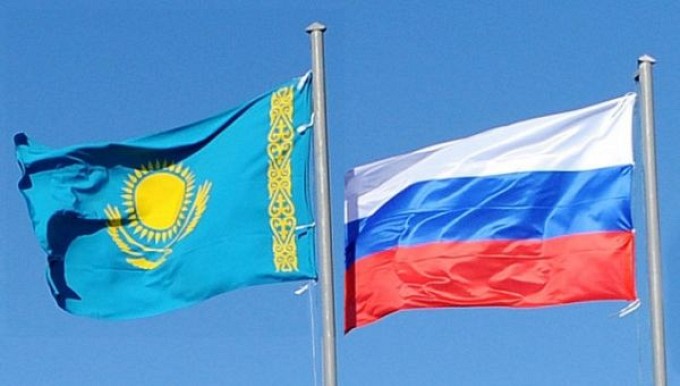
On March 31, Russia's Federal Service for Veterinary and Phytosanitary Surveillance issued information about violations and "gray" schemes in the supply of plant products from Kazakhstan to Russia. The press release also stated that the Kazakh Ministry of Agriculture "is not demonstrating a willingness to actively engage," which "creates the preconditions for the development of a 'shadow' economy." The Kazakh Grain Union responded to this statement, according to APK News.
As Yevgeny Karabanov, official representative of the Grain Union, told us, what Rosselkhoznadzor is currently reporting regarding complaints and appeals from Russian businesses is outdated information from 2022.
"This situation occurred when, in August 2024, Kazakhstan temporarily banned grain imports from all countries. Russia reacted very nervously, believing that this ban specifically applied to Russian grain, although it was clearly stated that the ban was being imposed from all countries. Following this, accusations emerged that the Kazakh Ministry of Agriculture was issuing certificates for products that the recipient in Russia had not received. The Ministry of Agriculture was accused of issuing these documents. But the Ministry of Agriculture issues them based on the exporter's application and documents confirming laboratory testing of the goods, and so on. Based on this, the Ministry of Agriculture issues the certificate. It is not obligated to verify the recipient. Indeed, it has no way to verify this. It lacks such authority. I believe that Rosselkhoznadzor's accusation is completely groundless. The Ministry of Agriculture has no right to investigate the origin of the goods or to investigate whether the recipient is the right one," our source said in a telephone conversation.
The expert also pointed to "incompetent actions" on the part of the State Inspection Committee for Agriculture of the Kazakh Ministry of Agriculture, namely the ban on grain imports from Russia on March 21. However, the agency quickly reversed its decision, issuing a new document.
The situation Rosselkhoznadzor is now mentioning occurred in 2022, when restrictions on importing sanctioned products from unfriendly countries were tightened.
"I call this 'legalizing sanctions.' Back then, products were shipped from Europe to Kazakhstan, and then, disguised as Kazakh products, they were shipped to Russia. This was regularly reported. It was a fraudulent transnational scheme involving Russians and Kazakhs. I think that's what we're talking about. The Ministry of Agriculture of the Republic of Kazakhstan has nothing to do with it. Rosselkhoznadzor's accusations are unfounded," said Evgeny Karabanov.
"Perhaps Rosselkhoznadzor has new violations? Why did the agency present data from 2022 now?"
"No, this is old data. It was recorded during those years. The point is that this information is a warning to Russia following the letter from the Ministry of Agriculture of the Republic of Kazakhstan on March 21." "This is an attempt to raise eyebrows and recall past events. That's how I see it," our source concluded.
APK Novosti contacted the Ministry of Agriculture of the Republic of Kazakhstan for clarification on this matter, but has not yet received a response.