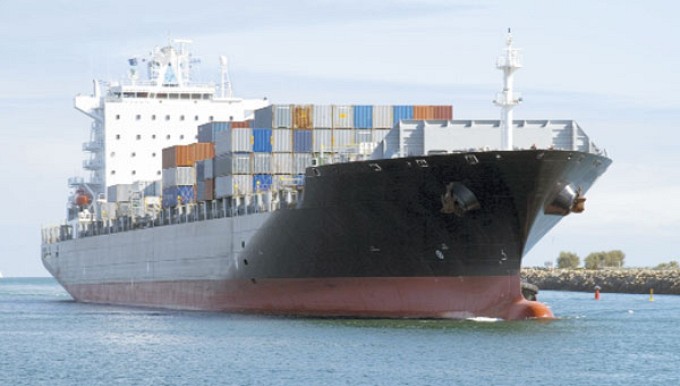
Shipping in the Middle East has been disrupted, with 15% of global grain supply at risk, according to OleoScope.com. Escalation in the Strait of Hormuz threatens to paralyze flows, leading to higher prices for raw materials and fertilizers worldwide, according to APK News.
"The strikes and Iran's subsequent retaliatory attack on commercial vessels have disrupted shipping in the Strait of Hormuz, a key shipping corridor for transporting oil, grain, and fertilizer. According to The Wall Street Journal, on March 1, Iranian drones and missiles struck several commercial vessels, including oil tankers associated with Western and Israeli companies. The attacks resulted in fires, crew evacuations, and casualties.
In response to the escalation, the Joint Maritime Information Center raised the threat level in the region from "severe" to "critical." Experts emphasize that although no legal closure of the strait has been declared, the actual situation poses a direct kinetic hazard to passing vessels," OleoScope.com reports.
This immediately impacted insurance companies, with existing policies being cancelled and rates sharply increasing for vessels transiting the Persian Gulf and the Strait of Hormuz.
The world's largest shipping companies have already responded to the threats by immediately suspending transit.
For example, Maersk, which controls 15-20% of global container throughput, announced a temporary suspension of services through the Bab el-Mandeb Strait and the Suez Canal. All vessels on the ME11 (Middle East-India-Mediterranean) and MECL (Middle East-US East Coast) routes are being rerouted around the Cape of Good Hope. MSC, Hapag-Lloyd, and CMA CGM have taken similar measures. In their statements, they cite the priority of the safety of crews and cargo amid the deteriorating military situation.
The current crisis is directly related to global food security, the portal also reports. It cites data from the think tank Chatham House:
The Suez Canal handles 13-15% of all seaborne grain and oilseed shipments;
approximately 20% of global fertilizer supplies;
15-17% of global wheat and rice trade.
"The current attacks are a continuation of the crisis that began in late 2023 with Houthi attacks in the Red Sea. By early 2024, wheat transit through the canal had already fallen by 40%. The current escalation in the Strait of Hormuz threatens to completely paralyze the remaining flows, which will inevitably lead to higher prices for raw materials and fertilizers for importers worldwide, the publication concludes," the report states.