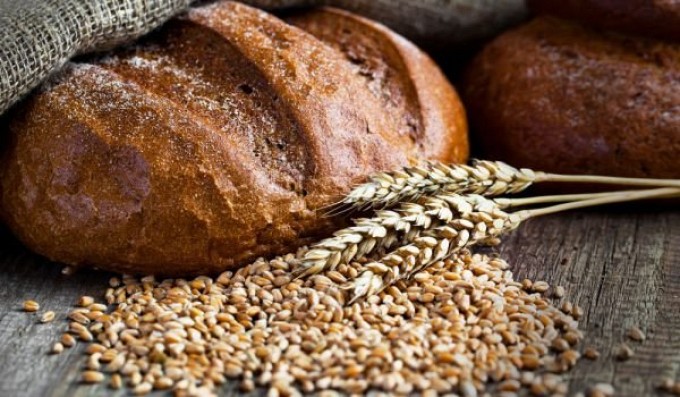
October 16 marks World Bread Day—a celebration highlighting the significance of one of our primary food staples and its role in food security. For Kazakhstan, which possesses substantial grain-production potential, the baking industry serves as a vital component of the agro-industrial complex, encompassing everything from grain cultivation and milling to the production of finished goods.
In recent years, Kazakhstan has seen an increase in its grain harvest. This year, the gross yield of grain and leguminous crops is expected to reach approximately 24 million tonnes—the highest volume in 15 years, excluding the two most recent record-breaking seasons.
Grain exports are also on the rise; for the 2025/2026 marketing season, approximately 16 million tonnes of grain—including flour, calculated in grain equivalent—have been exported.
Key importers of Kazakhstani grain include Uzbekistan, Tajikistan, Azerbaijan, Afghanistan, China, and various European Union nations.
The growth of grain production provides a foundation for the stable operation of domestic milling and baking enterprises. Flour production in Kazakhstan is double the level of domestic consumption, ensuring that the baking industry is well-supplied with locally produced raw materials.
Between January and August 2026, the country produced 325,500 tonnes of bread. The current production capacity of the nation’s bakeries stands at 502,000 tonnes. These enterprises are expanding their product ranges to meet consumer demand, manufacturing both short-shelf-life and long-shelf-life baked goods and flour-based confectionery.
The state has also put in place support measures to further the development of the processing industry. In particular, under the Concept for the Development of the Agro-Industrial Complex of the Republic of Kazakhstan for 2021–2030, agricultural enterprises that expand their production of bakery and/or confectionery products—with a capacity of at least 2,000 tonnes per year—are eligible for a 25% reimbursement of their capital investments.
An additional support measure is a tax incentive for flour producers. In accordance with Article 490 of the Tax Code of the Republic of Kazakhstan, a reduction in value-added tax (VAT) by 80% is provided.
World Bread Day was established in 2006 on the initiative of the International Union of Bakers and Confectioners. The date also coincides with the anniversary of the founding of the Food and Agriculture Organization of the United Nations (FAO), established on October 16, 1945. This organization works to address global challenges in the fields of agriculture, nutrition, and food security.
World Bread Day serves as an opportunity to recognize the efforts of agricultural producers, millers, and bakers, who ensure that grain makes its journey from the field to the consumer's table. Developing domestic production, strengthening processing capacities, and supporting enterprises remain essential conditions for ensuring food security in Kazakhstan.