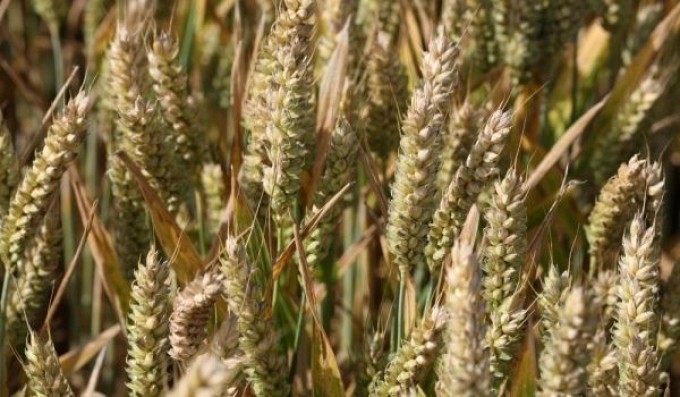
The mass harvesting campaign has begun in all major agricultural regions of Kazakhstan. According to the Ministry of Agriculture, 2.6 million hectares of grain crops have been harvested as of August 17 – double last year's figures. The average yield was 14.6 centners per hectare, according to the APK News agency.
As part of diversification, wheat acreage has been reduced by 875,000 hectares. However, the gross harvest continues to increase. Among other major crops, 1.6 million tons of melons, 1.1 million tons of vegetables, and 513,000 tons of potatoes have been harvested to date.
"These achieved figures are the result of consistently strengthening state support for the agricultural sector. Over the past two years, funding for the agricultural sector has increased from 140 billion tenge in 2023 to 1 trillion tenge in 2025. Particular attention has been paid to increasing the availability of financial resources at the early stages of the production cycle," the Ministry of Agriculture reports.
Today, adherence to technology is becoming a key factor in increasing the industry's productivity. Over the past two years, the use of mineral fertilizers has tripled to 1.8 million tons. This year, this figure is planned to reach 2.3 million tons. Contracts for the supply of 2 million tons of fertilizer have already been signed, of which 1.9 million tons, or 83% of the annual plan, have been shipped to agricultural producers.
Work to improve the quality of seed stock continues. The use of elite seeds has increased from 7.1% in 2023 to 11.6% today.
At the same time, the technical re-equipment of the industry is accelerating. Under the preferential leasing program, funding has increased tenfold, reaching 350 billion tenge in 2026. Since the beginning of the year, 6,790 applications have been financed under the program, totaling 256.3 billion tenge, for the purchase of 7,718 units of agricultural machinery. Overall, farmers purchased approximately 25,000 units of modern equipment last year, and the rate of renewal of their machinery and tractor fleet accelerated: from 6% in 2024 to 6.5% in 2025, and this year it is expected to increase to 8%.
"Analysis conducted in the main grain-growing regions shows a stable relationship between the level of technological support of farms and final yield. The higher the level of compliance with agricultural technologies and the availability of necessary resources, the higher the efficiency of production. Therefore, further development of the industry is focused on increasing productivity per hectare, rational use of resources, and the consistent implementation of modern technologies," the department reported.
Infrastructure has been prepared in advance for the new harvest. According to regional akimats, the total grain storage capacity in the republic is 30.6 million tons. Of these, 13.2 million tons were stored at operating licensed grain receiving facilities, and another 17.4 million tons were stored at agricultural producers' facilities. There are currently 189 operating grain receiving facilities in the republic.
According to the Qoldau.kz portal, the utilisation rate of licensed grain storage facilities is 2.5 million tons, or 18%. Available storage capacity is 10.7 million tons.
The quality of incoming wheat also remains high. A total of 469,500 tons of grain from the new harvest were received at licensed grain receiving facilities. This is almost four times higher than the same period last year, when the volume of grain received was 120,500 tons.
Of the new soft wheat harvest received for storage, 70% is classified as third-class wheat, 18% as fourth-class wheat, and 12% as fifth-class and non-class wheat.
A key factor in the harvest campaign remains the timely supply of diesel fuel to farmers. A fuel supply schedule for agricultural producers has been established this year. The total volume of diesel fuel allocated for the agricultural sector in 2026 amounts to 803,000 tons. Of this, 402,000 tons are allocated for spring field work, and 401,000 tons for autumn work.
Taking into account operator costs (including transportation costs), the final price for agricultural producers in the main grain-growing regions is 305-310 tenge per liter, which is 10% lower than the market price (the gas station price is 335-340 tenge/liter as of August of this year). To date, 71,000 tons of fuel have been shipped. The government is constantly monitoring the supply of fuel to farmers.
Crop yields, rather than expanding acreage, are becoming the primary driver of growth. The current harvest campaign reflects the agricultural sector's transition to a more productive model: one in which production growth is achieved primarily through increased efficiency and yields.
Changes in cropping patterns are accompanied by technological modernization in the industry. The use of fertilizers and high-quality seeds is expanding, agricultural machinery is being upgraded, and water-saving technologies are being implemented. State support covers the main stages of the production cycle—from early financing and resource provision to farm modernization and the development of necessary infrastructure.
"The consistency of measures taken by the government allows us to consolidate the achieved results and create a sustainable foundation for further productivity growth in the agricultural sector. Future work will be aimed at increasing agricultural productivity, implementing modern technologies, rationally using land and water resources, reducing costs, and improving the economic returns of agricultural production. This is in line with the Head of State's strategic objective of creating a competitive, technologically advanced, and sustainable agro-industrial complex capable of supplying the domestic market with high-quality products and consistently increasing Kazakhstan's export potential," the Ministry of Agriculture of the Republic of Kazakhstan concluded.