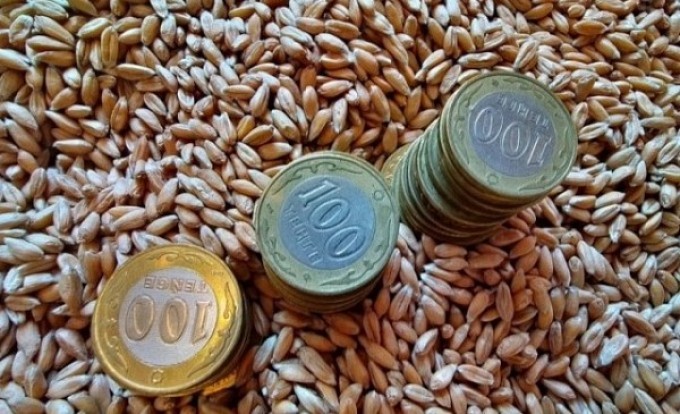
Grain exports from Kazakhstan have been declining for several weeks. Previously, the market was pressured by changes to the Tax Code regarding VAT refunds for exporters and the weakening tenge. Market concerns were heightened by the Ministry of Finance's initiative to introduce export duties on grain and oilseeds.
"The disparity between domestic and export prices continues to deprive exporters of profitability. Further uncertainty is being added by the Ministry of Finance's initiative to introduce export customs duties on wheat, barley, flaxseed, and rapeseed, as well as the latest proposal by the national railway carrier, NC KTZ, to increase railway tariffs, including for grain exports. These factors, along with the seasonal decline in activity in the grain market, are leading to export stagnation," said Yevgeny Karabanov, head of the analytical committee of the Kazakhstan Grain Union.
A discussion of the Ministry of Finance's initiative took place last week at the Atameken National Chamber of Entrepreneurs. As Evgeny Karabanov explained, the Ministry of Finance proposes introducing export customs duties on grain crops (wheat and barley) at $30 per ton and on oilseeds (flaxseed and rapeseed) at 20% of the customs value, but no less than €50 per ton. The stated goals are to increase budget revenue and develop domestic processing.
"Business participants at the meeting—professional associations and the Atameken National Chamber of Entrepreneurs—categorically opposed this initiative and noted that any increase in fiscal pressure on the industry would lead to significant revenue losses for agricultural producers and, consequently, to a worsening of the industry's problems. A recent example is the amendments to the Tax Code regarding VAT refunds on agricultural exports and duties on sunflower seeds. "The parties have been asked to provide their calculations and justifications," noted Evgeny Karabanov.
He also noted that grain export shipments are currently slow. Processors (millers and feed meal producers) remain the main buyers of wheat on the domestic market. Grain prices remain stable.
Over the past week, the export price of grade 4 wheat increased slightly by USD 1 per ton to USD 261-265 per ton (Saryagash).
Barley export bid prices decreased by USD 5 per ton at Saryagash, to USD 230-235 per ton.
According to the Analytics Committee of the Grain Union of Kazakhstan, from May 11th to 17th, grain prices were (EXW elevator, in tenge per ton, including 16% VAT):
Class 3 wheat (23-24% gluten) - 96,000-99,000
Class 3 wheat (25-26% gluten) - 97,000-101,000
Class 3 wheat (27% gluten) - 104,000-107,000
Class 3 wheat (28-29% gluten) - 110,000-114,000
Class 3 wheat (30+ gluten) - 121,000-125,000
Class 4 wheat - 95,000-97,000
Class 5 wheat - 93,000-95,000
Feed barley - 90,000-93,000
Seeds Flax - 228-233 thousand
Export prices (USD/ton):
Wheat, class 3 (gluten 23-24%) - 269-273 DAP Saryagash
Wheat, class 3 (gluten 25-26%) - 273-277 DAP Saryagash
Wheat, class 3 (gluten 27%) - 276-281 DAP Saryagash
Wheat, class 3 (gluten 28-29%) - 290-295 DAP Saryagash
Wheat, class 3 (gluten 30+) - 310-315 DAP Saryagash
Wheat, class 4 - 261-265 DAP Saryagash
Wheat, class 5 - 256-260 DAP Saryagash
Barley - 230-235 DAP Saryagash
Barley - 255-260 FOB Aktau
Barley - 235-238 DAP Dostyk/Altynkol
Flaxseed - 520-525 - FCA departure station
Wheat flour (DAP Saryagash, USD/t):
Kazakhstan flour (Atta - Afghan milling) - 265-270
Prime flour - 310-315
Premium flour - 400-405