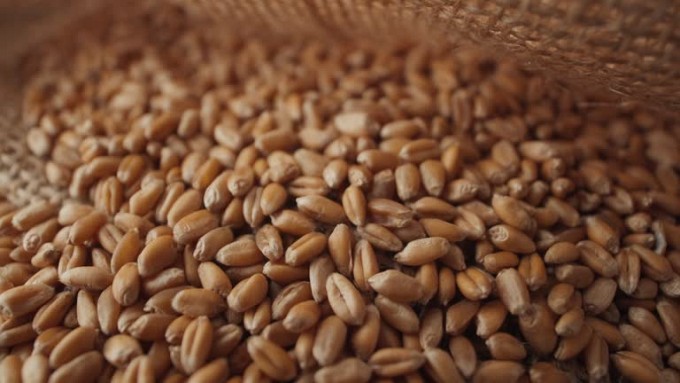
The introduction of export customs duties on certain goods, including grains and oilseeds, is being discussed in Kazakhstan, according to the APK News agency.
According to the Kazakhstan Grain Union, a meeting on this issue was held today at the Atameken National Chamber of Entrepreneurs with the participation of the State Revenue Committee of the Ministry of Finance of the Republic of Kazakhstan and other government agencies. Representatives of government agencies, industry associations from the grain sector, the oil and gas industry, and the mining and metallurgical complex participated in the discussion.
"Following the discussion, business representatives expressed a consolidated position that it is premature to introduce export duties under the current conditions. For the grain industry, the introduction of export duties on grains and oilseeds will inevitably lead to a decrease in domestic purchase prices and, consequently, in the income of agricultural producers," the Union reported.
Furthermore, they noted that the agricultural sector is already bearing significant strain due to rising logistics, financial, and production costs.
"Grain exports remain one of the key sources of income for rural regions. "Additional administrative burdens could negatively impact production profitability and investment activity in the agro-industrial complex," the ZSK believes.
According to grain market participants, the introduction of export restrictions and duties is premature until processing facilities are commissioned and reach stable capacity.
In this regard, it was noted that a discussion of export duties on agricultural raw materials is only possible after the creation and full launch of sufficient processing capacity within the country.
"Under current conditions, the agricultural sector is already undergoing a significant number of changes and reforms related to tax, tariff, logistics, and financial policies. Market participants believe that the introduction of additional mechanisms to pressure agricultural producers' profitability during this period requires an extremely balanced and cautious approach, as it directly affects the sustainability of farms and the further development of the industry," the Union noted.
The Grain Union of Kazakhstan believes it is important to maintain predictable trading conditions and continue systematic work to develop deep processing of agricultural products without creating additional burdens on agricultural producers.
Meanwhile, the Kazakhstan Farmers Association categorically opposed this measure and voiced the following arguments:
- a drop in farmers' incomes.
The main problem: duties almost always reduce the domestic purchase price. The difference is pocketed by processors or traders;
- reduced incentives to grow crops.
If it's unprofitable for a farmer to grow sunflower or wheat, crop yields and yields decline within 2-3 seasons;
- loss of export markets.
Kazakhstan is highly dependent on foreign markets. If exports are restricted too severely, buyers switch to Russia, Ukraine, Canada, or Australia;
- the risk of lobbying.
Duties often become a hidden subsidy for individual processors;
- the logic is weaker for grain.
Kazakhstan produces grain approximately twice as much as domestic consumption, and the government itself acknowledges that exports are critical for the industry.
"The optimal model for Kazakhstan looks like this: for grain, do not impose permanent export duties; Use only temporary measures in cases of force majeure, such as drought, price spikes, or the threat of shortages.
For oilseeds, moderate and temporary duties are permissible if there is support for farmers; the duty is predictable; there is investment in processing; and the measure is time-limited.
Otherwise, an imbalance arises: processors benefit, while farmers lose motivation to expand production.
The main risk for Kazakhstan is not the lack of duties, but the unpredictability of policy. The worst thing for farmers is when export regulations change every season," the Association believes.