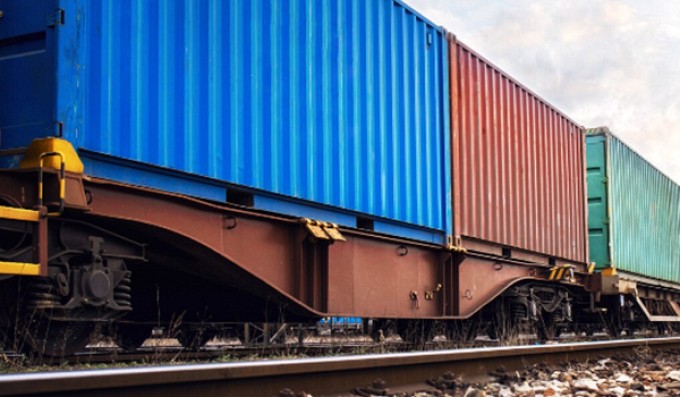
Feed meal exporters are reporting train delays at the Chinese border and cargo returns at China's initiative. This was reported to the APK News agency by Zeinollah Abdumanapov, Chairman of the Board of the National Association of Exporters "KazGrain." The Grain Union believes that the Chinese Central Government, concerned about the increase in supplies, is deliberately slowing down the import of feed meal from Kazakhstan.
"Members of our association have contacted us regarding the delays of their trains at the border and the return of their shipments by China. In other words, Chinese customs is allegedly refusing to accept Kazakh products, specifically Kazakh feed meal, citing non-compliance with certain standards," Abdumanapov said.
The Association's administration has contacted the Ministry of Agriculture, sending an official letter requesting assistance in resolving this issue. An appeal has also been written to Chinese representatives, stating that all standards have been met by shippers and are in line with international norms.
"The demands of Chinese companies and Chinese customs don't correspond to the trade standards that exist between us. We believe this issue needs to be resolved, and I hope the Ministry of Agriculture will get involved and help our shippers resolve it," said the head of the Association.
The situation began in late December, Yevgeny Karabanov, head of the Analytics Committee of the Kazakhstan Grain Union, told us in a telephone conversation.
"Initially, there were isolated problems. Now, the Chinese side has begun paying more attention to milling coarseness. Some of our producers have begun simplifying the technology, rushing things, and not fully processing them. This is probably where it started, but I think the root of the problem is something entirely different. It's an attempt to slow down the import of feed meal from Kazakhstan," said Yevgeny Karabanov.
The reason for this is that imports have become too large.
"I already spoke about this last year." There are reports that the Chinese central government is concerned about the increase in animal feed meal supplies, because animal feed meal is already going not only to the Xinjiang Uygur Autonomous Region, but also to Central China. Central China relies on Chinese feed wheat, which they produce in sufficient quantities. They only buy high-quality wheat from the global market. Therefore, I think this is an attempt to artificially limit the supply of cheap animal feed meal to Central China. This means it will be cheaper than, say, Chinese wheat. This is an attempt to regulate the market so that the Chinese feed wheat market doesn't collapse and so that the Chinese government doesn't have to subsidize its farmers," our source noted.
According to him, the price of wheat in China is quite high. And it's stable—around $300.
When asked whether the Chinese authorities would continue this policy or if it was a "one-off measure," Evgeny Karabanov replied:
"I think if they continue this, it's most likely a matter of policy. Let's say it's an administrative lever. Because, logically, fine grinding is more typical for food flour. And the logic here is contradictory. If they ask for stricter grinding requirements, that's essentially a ban on food flour. For feed production, particle size doesn't really matter."
Therefore, Kazakhstani feed flour producers will be forced to invest in additional technologies.
"Do you think that by the end of the season, the volume of feed flour exports from Kazakhstan to China will be significantly reduced?"
"I don't think so yet. I think we'll have to observe," said E. Karabanov.